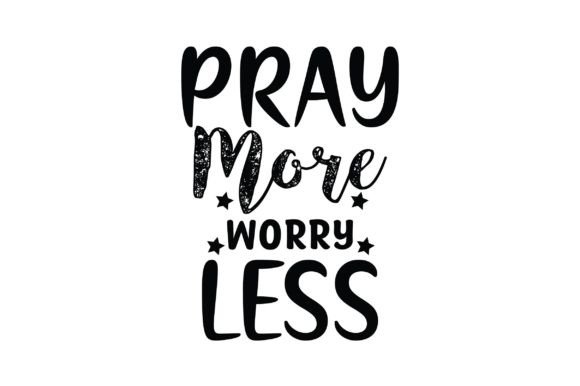
Pray More Worry Less: A Practical Guide to Peace
In a culture that glorifies hustle and constant productivity, anxiety often becomes the default operating system for professionals, creators, and entrepreneurs. The mental load of managing businesses, nurturing families, and maintaining personal well-being can create a persistent background noise of stress. Pray More Worry Less is not merely a spiritual slogan; it represents a functional framework for cognitive and emotional regulation. For adults navigating high-pressure environments, shifting from worry to prayer offers a tangible method to reclaim mental bandwidth, improve decision-making clarity, and sustain long-term resilience.
Understanding this concept requires moving beyond religious abstraction into practical application. Worry is essentially a misdirected form of problem-solving. It is the brain’s attempt to control uncertain outcomes through repetitive simulation of negative scenarios. Prayer, in this context, acts as a deliberate cognitive interrupt. It transfers the burden of control from the limited self to a higher power, effectively closing open loops in the mind. For the marketer facing a volatile algorithm change or the freelancer navigating income instability, this transfer is not passive resignation. It is an active reallocation of energy from unproductive rumination to focused, present-moment action.
Reclaiming Cognitive Bandwidth for Creative Work
Creativity and chronic worry cannot coexist efficiently. Both demand significant executive function and working memory. When a writer, designer, or educator is consumed by anxiety about future outcomes, their capacity for deep work diminishes. The prefrontal cortex, responsible for innovation and complex thought, becomes hijacked by the amygdala’s threat detection systems. Pray More Worry Less serves as a protocol for restoring access to higher-order thinking.
Consider a small business owner launching a new product line. The natural tendency is to obsess over potential failures: supply chain disruptions, negative reviews, or cash flow gaps. While risk assessment is necessary, obsessive worry paralyzes execution. By implementing structured prayer or meditative surrender as part of the morning routine, the entrepreneur creates a psychological boundary between legitimate planning and toxic rumination. This practice does not eliminate business risks, but it eliminates the mental tax of carrying those risks emotionally. The result is often clearer strategic thinking and more authentic creative output, as the mind is no longer clouded by catastrophic forecasting.
Enhancing Decision-Making Under Uncertainty
Professionals aged 20 to 50 frequently face decisions with incomplete information. Whether choosing a career pivot, selecting a vendor, or navigating a family crisis, uncertainty breeds anxiety. Worry tends to narrow focus, causing individuals to make fear-based decisions rather than value-based ones. A worry-driven leader might avoid necessary conflict or delay innovation to maintain a false sense of safety.
Integrating the principles of Pray More Worry Less introduces a pause mechanism in the decision cycle. This pause allows for the separation of signal from noise. Instead of reacting to the immediate emotional spike of uncertainty, the individual engages in a practice of trust and release. This shift supports better outcomes because decisions made from a place of grounded peace are typically more sustainable and aligned with long-term goals than those made from panic. For example, a freelancer deciding whether to fire a difficult client may worry about income loss. Through prayerful reflection, they may find the clarity to prioritize mental health and reputation over short-term revenue, leading to better opportunities down the line.
Strengthening Communication and Leadership Presence
Anxiety is contagious. In team settings, classrooms, or households, a leader’s internal state directly impacts the emotional climate of the group. When a manager or parent operates from a baseline of worry, communication often becomes reactive, micromanaging, or inconsistent. Others sense the tension and respond with defensiveness or disengagement. Pray More Worry Less functions as an emotional regulation tool that enhances interpersonal effectiveness.
When individuals regularly practice releasing their anxieties through prayer, they cultivate a presence that others perceive as stability. This does not mean ignoring problems or feigning positivity. Rather, it means approaching challenges with a calm assurance that fosters psychological safety. A teacher who has processed their anxiety about student performance through private prayer is better equipped to offer patient, constructive feedback in the classroom. A project manager who has surrendered the need to control every variable communicates trust to their team, which in turn boosts morale and autonomy. The practical benefit here is relational capital; people follow and listen to those who appear anchored amidst chaos.
- Reduced Reactivity: Creating space between stimulus and response prevents emotionally charged emails or conversations.
- Increased Empathy: Releasing personal anxiety frees up emotional resources to truly listen to colleagues and loved ones.
- Authentic Vulnerability: Admitting limitations through prayer allows leaders to model healthy boundaries and ask for help without shame.
Who Benefits Most From This Approach
While the philosophy applies broadly, specific demographics within the 20–50 age range derive unique value from adopting a Pray More Worry Less mindset. High-functioning professionals who struggle with imposter syndrome often find relief, as the practice reframes success as stewardship rather than self-validation. Caregivers and parents balancing multiple responsibilities benefit from the permission to relinquish total control, reducing burnout. Creatives and artists, whose work is inherently subjective and uncertain, use this framework to separate their self-worth from external reception.
Entrepreneurs and freelancers also represent a key demographic. Without the structural safety nets of traditional employment, their anxiety is often tied directly to survival. For these individuals, prayer is not a luxury but a risk management strategy for mental health. It provides a non-financial anchor when market conditions fluctuate. However, it is important to note that this approach resonates differently across individuals. Those who prefer strictly secular frameworks may adapt the "prayer" component to mindfulness, stoic reflection, or journaling while retaining the core mechanic of releasing control. The specific terminology matters less than the consistent practice of offloading mental burdens.
Navigating Limitations and Realistic Expectations
To maintain credibility and usefulness, one must acknowledge what Pray More Worry Less is not. It is not a substitute for professional mental health treatment, financial planning, or operational diligence. Spiritual bypassing—using prayer to avoid addressing tangible problems—is a common pitfall. If a business has a cash flow problem, prayer should accompany, not replace, budget restructuring. If an individual suffers from clinical anxiety disorder, spiritual practices should complement, not supersede, therapy and medication.
Furthermore, the transition from worry to prayer is rarely linear. Longstanding neural pathways associated with anxiety do not vanish overnight. Practitioners should expect cycles of progress and regression. The goal is not the permanent absence of worry, but a reduced recovery time and increased awareness of when rumination begins. Comparing options is also valid; some may find structured liturgy helpful, while others prefer spontaneous conversation or silent meditation. The most effective method is the one that consistently facilitates the release of attachment to outcomes.
Ultimately, the value of Pray More Worry Less lies in its ability to reorient the modern professional toward sustainable living. In an economy that profits from distraction and fear, choosing peace is a counter-cultural act of efficiency. It simplifies decisions by clarifying values, strengthens relationships through emotional regulation, and protects creativity by guarding cognitive resources. For the adult navigating the complexities of contemporary life, this practice offers a path to remain engaged and ambitious without being consumed. It transforms anxiety from a master into a signal, pointing not toward catastrophe, but toward the need for deeper trust and intentional action.