Line Art Vector Illustration Ballerina: A Practical Guide to Selection and Application
The elegance of ballet translates beautifully into digital design, but finding the right line art vector illustration ballerina requires more than a simple keyword search. For designers, marketers, and business owners, these illustrations serve as versatile assets for branding, editorial content, packaging, and web design. The appeal lies in their scalability and minimalist aesthetic, which allows them to communicate grace and movement without overwhelming a layout. However, the gap between a generic clip-art file and a professional-grade vector asset is significant. Understanding the technical and artistic nuances of these files prevents costly redesigns and ensures your final project maintains the sophistication associated with dance.
Distinguishing True Vectors from Raster Traces
One of the most frequent issues encountered when sourcing dance imagery is acquiring files that are not true vectors. Many marketplaces and free resource sites label images as "vectors" simply because they are saved in an .EPS or .AI format. In reality, these are often raster images (JPEGs or PNGs) embedded within a vector container. When you attempt to scale these up for a banner or resize them for a business card, the edges become pixelated or blurry rather than remaining crisp.
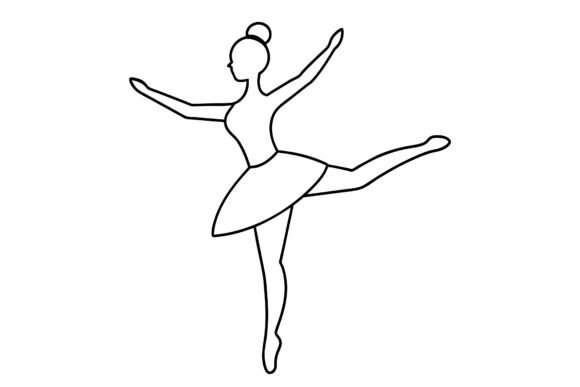
A genuine line art vector illustration ballerina is constructed entirely from mathematical paths and anchor points. Before purchasing or downloading, always open the file in software like Adobe Illustrator, Affinity Designer, or Inkscape. Use the direct selection tool to click on the artwork. If you see individual anchor points and bezier curves that you can manipulate, it is a true vector. If clicking the image selects a single bounding box containing a flat picture, it is a raster trace. Using embedded rasters limits your ability to change stroke weights, adjust colors, or modify the pose, effectively negating the primary benefits of using vector graphics.
Evaluating Line Quality and Anatomical Accuracy
Minimalism does not excuse poor anatomy. In line art, every stroke carries weight, meaning there is nowhere to hide structural errors. A common mistake is selecting illustrations where the limbs appear rubbery or disjointed in an attempt to exaggerate flexibility. While artistic license is valid, unintentional anatomical errors can make a brand look amateurish, especially if your audience includes dancers, instructors, or studio owners who possess a trained eye.
When evaluating potential assets, scrutinize the following details:
- Joint articulation: Knees and elbows should have subtle indications of structure, even in simplified styles. Completely straight lines for limbs often look stiff and unnatural.
- Weight distribution: The ballerina should appear grounded or suspended with intention. Figures that look like they are floating aimlessly or falling over lack the core strength characteristic of ballet.
- Hand and foot positioning: These extremities are notoriously difficult to draw. Avoid assets where fingers are fused or feet resemble blocks. Elegant, tapered lines suggest a higher level of craftsmanship.
- Line weight variation: Monoline art has its place, but dynamic line art uses varying stroke widths to imply depth, shadow, and muscle tension. Uniform lines can sometimes flatten the figure excessively.
Technical Pitfalls in File Structure and Editing
Even if the art is beautiful and truly vector-based, poor file hygiene can create workflow bottlenecks. Many creators overlook the internal organization of the file until they are deep in production. A disorganized line art vector illustration ballerina file might contain hundreds of ungrouped paths, expanded strokes that cannot be edited, or unnecessary clipping masks. This makes changing the color from black to a brand-specific navy blue a tedious, time-consuming process.
Before committing to an asset, check for editability. Ideally, strokes should remain as live strokes rather than expanded outlines. Live strokes allow you to globally adjust thickness and color via the stroke panel. Expanded outlines require you to manually select and recolor shapes, which increases the risk of missing elements. Additionally, verify that the layers are logically named and grouped. If you plan to animate the illustration later or use it across multiple variations, a clean hierarchy is essential for efficiency.
Licensing and Commercial Usage Clarity
Misunderstanding licensing terms is a risk that affects both legal safety and project viability. "Royalty-free" does not mean "free of restrictions," nor does it guarantee unlimited usage. Some licenses for line art vector illustration ballerina assets prohibit use in merchandise, logo creation, or NFT generation. Others may require attribution for commercial projects or limit the number of impressions or units sold.
Read the specific license agreement attached to the download, not just the general site terms. If you are designing a logo for a dance studio, ensure the license explicitly permits trademarking. Most standard stock licenses forbid this because stock art cannot be exclusively owned. Using restricted art in a trademark application can lead to rejection or future legal challenges. For educational materials or blog posts, standard commercial licenses are usually sufficient, but verifying this upfront saves potential headaches down the road.
Contextual Application and Stylistic Consistency
Selecting the right style is as important as technical quality. Ballet encompasses various eras and aesthetics, from classical Romantic tutus to contemporary minimalist leotards. A mismatch between the illustration style and your brand voice creates cognitive dissonance. An ornate, Victorian-style line drawing may feel out of place on a modern fitness app, while a stark, geometric abstraction might lack the warmth needed for a children’s recital program.
Consider the negative space and composition. Line art relies heavily on the interplay between the drawn lines and the background. Test the asset at various sizes before finalizing your choice. Intricate details that look stunning on a desktop screen may disappear or turn into visual noise when scaled down for a mobile icon or social media avatar. Conversely, overly simple lines may look sparse and unfinished when printed large-format. Always preview the asset in the actual context of your layout to ensure legibility and balance.
Customization as a Best Practice
Treat downloaded line art as a starting point rather than a finished product. To maximize value and uniqueness, customize the vector to fit your specific needs. This might involve adjusting the hairstyle to match a demographic, modifying the costume to reflect current trends, or combining elements from different files to create a custom scene. Customization also mitigates the risk of your brand looking identical to others who purchased the same asset.
If you lack advanced illustration skills, focus on simple modifications that yield high impact. Changing the stroke cap from round to square can alter the mood from soft to modern. Adjusting the opacity or adding a secondary offset path in a lighter shade can create depth without redrawing the figure. By investing time in refinement, you transform a generic line art vector illustration ballerina into a bespoke asset that aligns perfectly with your project’s goals and maintains professional integrity.