Planet Mars Background: Selecting Authentic and Usable Visual Assets
When searching for a Planet Mars background, the immediate results often lean heavily toward artistic interpretation rather than scientific accuracy. For educators, content creators, and designers, this presents a unique challenge. You are likely looking for an image that captures the awe of the Red Planet while maintaining enough fidelity to be credible. The distinction between a stylized sci-fi render and actual orbital imagery is significant, and choosing the wrong type can undermine the authority of your presentation, website, or educational material. Understanding what you are actually looking at is the first step in selecting a visual asset that serves both aesthetic and functional purposes.
Distinguishing Artistic Renders from Orbital Imagery
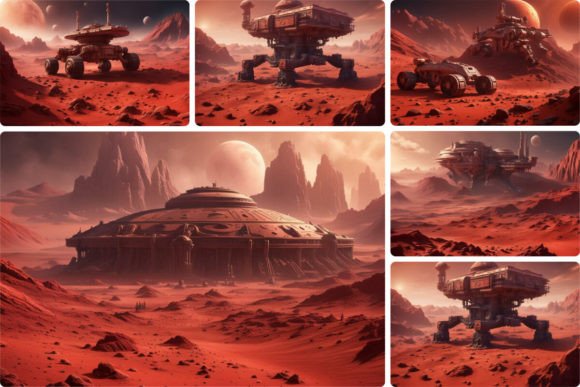
A common oversight when acquiring a Planet Mars background is assuming that high-resolution equals high accuracy. Many top-ranking images in stock libraries are digital paintings created by 3D artists. While these can be visually stunning, they often exaggerate surface features, saturate the color to an unrealistic orange, or include atmospheric effects that do not exist on Mars. If your project involves astronomy education, space industry marketing, or scientific communication, using an artistic render can inadvertently signal a lack of rigor to your audience.
Conversely, authentic imagery from NASA’s Mars Reconnaissance Orbiter or ESA’s Mars Express may appear flatter or less vibrant initially. This is because raw data requires processing to approximate true color. When evaluating potential backgrounds, check the metadata or source description. Look for specific instrument references like HiRISE or CaSSIS. If the source simply lists "Mars landscape" without attribution to a space agency or specific mission, treat it as art. Neither choice is inherently wrong, but mislabeling art as science creates trust issues that are difficult to repair later.
The Pitfall of Ignoring Color Calibration
Mars is famously red, but it is not uniformly bright orange. A frequent mistake in design projects is over-saturating the Planet Mars background to meet audience expectations shaped by pop culture. Real Martian regolith ranges from butterscotch and tan to deep rust and even greenish-grey depending on mineral composition and lighting conditions. Using a hyper-saturated background can cause text readability issues and create visual fatigue for viewers.
Furthermore, uncalibrated colors can misrepresent the environment. For professional presentations, consider using images processed with "true color" or "natural color" calibration standards. These versions adjust for the camera sensor's bias and the dusty atmosphere to show what the human eye would actually perceive. If you must use a stylized, redder version for dramatic effect, ensure it is balanced with neutral UI elements so the overall composition remains accessible and professional.
Licensing and Attribution Requirements
Another critical area where users stumble is licensing. Because so much Mars imagery originates from government space agencies, there is a pervasive assumption that all Planet Mars background assets are public domain. While NASA-generated imagery is generally free of copyright restrictions within the United States, this does not apply universally. Images processed by private contractors, international partners like the European Space Agency, or independent astrophotographers carry their own specific usage terms.
- Verify the Source: Always trace the image back to the original provider. A repost on a wallpaper site does not inherit public domain status.
- Check International Restrictions: ESA and JAXA imagery often require specific attribution lines that differ from NASA guidelines.
- Commercial vs. Editorial: Even if an image is free, using it to endorse a product may violate agency policies regarding implied endorsement.
- Model Releases: Not applicable for planets, but relevant if the background includes recognizable rover hardware or astronaut likenesses in composite images.
Failing to secure proper rights can lead to takedown notices or legal complications, particularly for commercial entrepreneurs and small business owners. Taking five minutes to verify the provenance of your chosen background saves significant risk downstream.
Technical Resolution and Aspect Ratio Mismatches
Selecting a Planet Mars background based solely on thumbnail appeal often leads to technical failures during implementation. Mars is a sphere, and most available imagery consists of rectangular projections of curved surfaces. When applied to wide-format websites or ultrawide monitors, these projections can stretch horizontally, distorting craters and geological features. This distortion looks unprofessional and distracts from your core message.
Before downloading, assess the native aspect ratio of the image against your intended canvas. If you need a panoramic web header, look specifically for cylindrical projections or mosaics designed for wide formats rather than cropping a square orbital shot. Additionally, verify the effective resolution. An image labeled "4K" might be upscaled using AI interpolation, which introduces artifacts that become glaringly obvious when text is overlaid. Always prioritize native resolution over marketed dimensions. A crisp 1080p image is superior to a muddy, artifact-ridden 4K upscale for background use.
Accessibility and Foreground Integration
A beautiful Planet Mars background fails if it renders your content unreadable. Designers frequently select high-contrast, detailed terrain shots that clash with white or light-colored text. The complex texture of Martian geology creates visual noise that reduces legibility, forcing users to strain their eyes. This is not just a usability issue; it is an accessibility barrier that excludes users with visual impairments.
To correct this, evaluate the luminance uniformity of the background. Areas with consistent brightness work best behind text. If you love a highly detailed crater field, apply a dark overlay or gradient mask to create a dedicated negative space for your content. Alternatively, position your text over the darker shadow regions of the planet rather than the sunlit highlands. Testing your background with contrast checking tools ensures that your fascination with Mars does not compromise the functionality of your design.
Evaluating Scientific Context for Educational Use
For educators and science communicators, the context of the Planet Mars background matters as much as its visual quality. Using an image of Olympus Mons to illustrate a lesson about Valles Marineris confuses learners and propagates misinformation. Geological features on Mars are distinct, and generic captions like "Mars Surface" are insufficient for educational materials.
Adopt a verification workflow before publishing. Cross-reference the visual features in your background with geological maps or mission archives. Ensure that the scale is appropriate; a close-up of sand dunes should not be presented as a planetary overview. Providing accurate captions, including coordinates or feature names, adds immense value to your content and demonstrates expertise. It transforms a decorative backdrop into a teaching tool. When in doubt, link to the original mission page so your audience can explore the primary source. This practice aligns with E-E-A-T principles by showing transparency and commitment to accuracy.
Making Informed Selection Decisions
Ultimately, the best Planet Mars background is one that aligns with your specific goals, respects intellectual property, and serves your audience effectively. Avoid the temptation to grab the first striking image from a search engine. Instead, approach selection with the same diligence you apply to other project components. Ask whether the image supports your narrative, meets technical specifications, and adheres to ethical usage standards.
By prioritizing authenticity, verifying licenses, respecting technical constraints, and ensuring accessibility, you elevate your work above generic space content. Whether you are building a brand, teaching a class, or creating art, thoughtful curation of Martian imagery reflects professionalism and respect for both the subject matter and your audience. The extra effort invested in finding the right asset pays dividends in credibility, engagement, and long-term satisfaction with your final output.