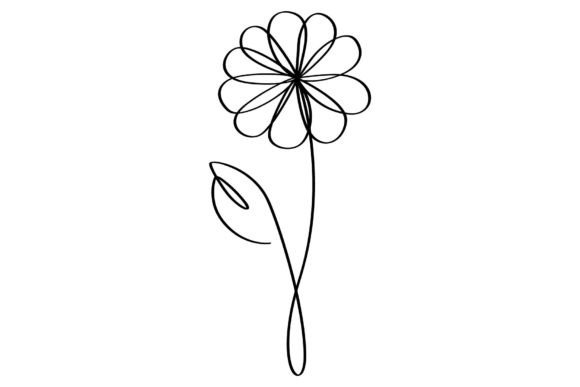
Single-line Art of Flowers: Practical Applications for Modern Design and Expression
At its core, single-line art of flowers is a continuous line drawing where the pen or stylus never lifts from the surface until the image is complete. Unlike traditional botanical illustration, which relies on shading, cross-hatching, and multiple strokes to create depth, this style captures the essence of a bloom through fluid motion and negative space. The result is an aesthetic that feels simultaneously minimalist and deeply organic. For adults navigating creative projects, home styling, or brand identity, understanding the utility of this art form goes far beyond simple decoration. It is a versatile visual language that communicates elegance, sustainability, and mindfulness without visual clutter.
Elevating Brand Identity and Packaging
In the saturated market of wellness, beauty, and artisanal goods, brands often struggle to stand out without appearing loud. Single-line floral art offers a sophisticated solution for packaging and logo design. Because the artwork lacks heavy fills or complex gradients, it reproduces exceptionally well across various media. A continuous line rose looks just as striking embossed on recycled kraft paper as it does printed on a glossy cosmetic box or stitched onto a linen tote bag.
This style is particularly effective for businesses emphasizing natural ingredients or sustainable practices. The unbroken line suggests a connection to nature’s cycles and a "less is more" philosophy that resonates with eco-conscious consumers aged 25 to 45. When selecting this art for commercial use, consider the weight of the line. A thicker, uniform stroke reads as modern and bold, suitable for tech-forward skincare or contemporary florists. Conversely, a variable-width line that mimics the pressure of a hand-held pen conveys artisanal craftsmanship, making it ideal for boutique bakeries, wedding planners, or independent jewelry makers.
Digital Adaptability and Scalability
One of the most practical strengths of single-line flower art is its vector-friendly nature. Whether you are commissioning an artist or creating it yourself using tools like Adobe Illustrator or Procreate, these designs scale infinitely without losing quality. This makes them perfect for responsive web design. A delicate peony can serve as a subtle background element on a desktop hero section and shrink down to a crisp favicon or app icon without becoming a muddy blob. For social media managers, this art style provides a cohesive visual thread across platforms, maintaining brand recognition even when images are viewed on small mobile screens.
Interior Styling and Spatial Awareness
For homeowners and renters who want to personalize their space without overwhelming it, single-line botanical prints offer a unique advantage: they breathe. In small apartments or rooms with limited natural light, heavy artwork can make walls feel closer. The abundance of white (or wall-colored) space within a continuous line drawing creates an illusion of openness while still providing a focal point.
This art form pairs beautifully with current interior trends like Japandi, Scandinavian minimalism, and biophilic design. However, the application requires intention. Framing matters significantly here. Because the art relies on negative space, a mat border is often necessary to separate the delicate line from the frame edge, giving the flower room to exist. Floating frames, where the artwork is sandwiched between glass without a backing board, are particularly effective. They allow the wall color to become part of the composition, integrating the art seamlessly into the room’s palette rather than treating it as a separate object.
- Gallery Walls: Mix single-line flowers with typography or abstract shapes to prevent visual monotony. The consistent line weight ties disparate elements together.
- Textile Integration: These designs translate effortlessly to embroidery patterns, throw pillows, and table linens because they lack complex color blocking.
- Lighting Considerations: Avoid placing single-line art in direct, harsh sunlight where glare might obscure the thin lines. Diffused lighting enhances the subtlety of the stroke.
Mindfulness and Creative Practice
Beyond its visual applications, engaging with single-line art of flowers serves as a practical tool for mental regulation. For adults seeking a creative outlet that doesn't require years of technical training, this medium lowers the barrier to entry. The constraint of not lifting the pen forces a shift in cognitive processing. You cannot erase or correct easily; you must accept the flow and adapt. This mirrors mindfulness practices, encouraging presence over perfection.
Many professionals use this practice as a transition ritual between work and personal time. Spending ten minutes drawing a continuous hibiscus or lavender sprig can act as a tactile reset button, moving the brain from analytical problem-solving to sensory engagement. Unlike adult coloring books, which some find passive, generating a single-line drawing requires active spatial planning. It engages hand-eye coordination and proprioception, grounding the creator in the physical moment. For those interested in starting, focus on gesture rather than botanical accuracy. The goal is to capture the movement of the stem and the opening of the petal, not to create a scientific diagram.
Navigating Limitations and Selection Criteria
While versatile, single-line floral art is not a universal fix. Understanding its limitations prevents frustration. The primary challenge is detail. Complex flowers with hundreds of petals, like chrysanthemums or dahlias, can become chaotic tangles when rendered in one continuous line. Simpler silhouettes—tulips, poppies, calla lilies, and sunflowers—generally yield more readable results. If you desire intricate detail, this specific style may not be the right vehicle for your message.
Another consideration is emotional tone. Single-line art is inherently serene and somewhat detached. It rarely conveys intense passion, grief, or exuberant joy. It sits comfortably in the realm of calm appreciation and quiet beauty. When choosing this art for events like weddings or memorials, ensure the mood aligns with the occasion. A single-line lotus might feel too austere for a vibrant celebration but perfect for a reflective ceremony.
When sourcing or commissioning this work, verify the artist's process. True single-line art is created in one continuous motion. Some digital artists simulate this look using masking techniques or multiple paths merged later. While visually similar, simulated lines often lack the organic rhythm and slight imperfections that give authentic continuous line drawings their soul. If the human touch is central to your project’s value, ask to see time-lapse videos or process shots to confirm the integrity of the technique.
Material Pairings for Maximum Impact
The substrate you choose dictates how the art is perceived. On smooth, bright white paper, the line appears precise and graphic. On textured watercolor paper or handmade cotton rag, the same line feels softer and more traditional. For product applications, test prints on actual materials before committing. Ink behaves differently on uncoated versus coated surfaces; a line that looks elegant on screen might bleed into fuzzy obscurity on raw cardboard. Always prototype at full size, as line weights that look appropriate digitally can disappear when scaled down for business cards or labels.
Ultimately, single-line art of flowers succeeds because it respects the viewer’s intelligence. It offers a suggestion rather than a dictation, inviting the audience to complete the image in their own mind. Whether used to soften a corporate identity, open up a cramped living room, or center a busy mind, its power lies in what is left unsaid. By focusing on flow over form and essence over detail, this art form provides a timeless resource for anyone looking to bring a sense of grounded clarity to their visual environment.