Hedgehog Silhouette: Practical Guidance for Designers and Crafters
The hedgehog silhouette has become a staple in nature-inspired design, appearing frequently in nursery decor, logo concepts, educational materials, and seasonal crafts. Its appeal lies in the immediate recognition of the shape; even without internal detail, the rounded back and distinct snout communicate "hedgehog" instantly. However, this simplicity is often deceptive. Many creators, from professional graphic designers to hobbyist crafters using vinyl cutters, underestimate the technical nuances required to make this specific animal shape work effectively across different mediums.
Choosing or creating the right hedgehog silhouette is not merely about finding a cute outline. It involves understanding negative space, anatomical accuracy, and material limitations. A poorly executed silhouette can look like a generic blob or an unrecognizable creature, undermining the quality of your project. Whether you are purchasing a digital asset for commercial use or drawing one by hand for a laser engraving project, avoiding common pitfalls ensures your final result is both aesthetically pleasing and functionally sound.
Anatomical Accuracy vs. Stylization
One of the most frequent mistakes in hedgehog design is sacrificing too much anatomical truth for the sake of extreme minimalism. While stylization is valid, there is a tipping point where a hedgehog ceases to look like a hedgehog and starts resembling a rock, a loaf of bread, or a sea urchin. This usually happens when the creator ignores the specific proportions that define the animal.
Hedgehogs have a distinct facial structure. The transition from the spiny dorsal area to the smooth face should be clear. A common error is making the snout too blunt or merging it seamlessly into the quills. To maintain readability, ensure there is a visible distinction between the textured back and the softer underbelly and face. If you are designing for a small scale, such as a favicon or a lapel pin, you may need to exaggerate the snout length slightly to compensate for visual shrinking. Always test your silhouette at the smallest intended size before finalizing the design. If the identity is lost at 50 pixels wide, the curves need adjustment.
The Problem with Generic Spines
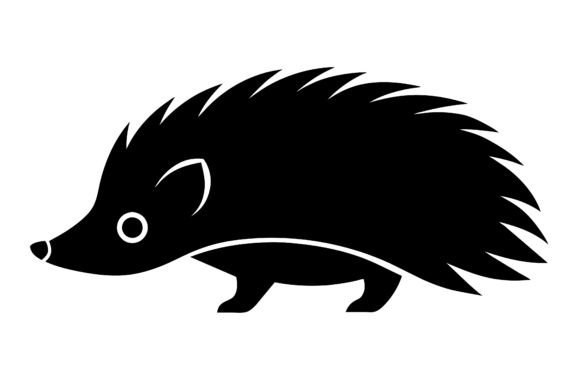
Another issue arises in how the quills are represented. In a solid black silhouette, individual spines cannot be shown through shading. Instead, they must be implied through the outer contour. Many downloadable vectors feature perfectly symmetrical, sawtooth edges that look mechanical rather than organic. Real hedgehogs have layered, irregular quill patterns. When selecting or drawing a hedgehog silhouette, look for variation in the spike height and spacing. Organic asymmetry reads as more natural and high-quality than rigid geometric repetition. This subtle detail separates professional-grade assets from amateur clip art.
Technical Considerations for Cutting and Fabrication
For makers using Cricut, Silhouette Cameo, or laser cutters, the digital preview often lies. A hedgehog silhouette that looks crisp on a screen can become a disaster when translated to physical media. The primary culprit here is fragile geometry. Hedgehog designs inherently involve many acute angles and thin points representing quills. These are structural weak points.
- Vinyl Weeding Issues: If the spikes are too thin or sharp, they will tear during the weeding process or fail to adhere to the transfer tape. Rounding the tips of the quills slightly (even by just a fraction of a millimeter) can save hours of frustration without noticeably changing the visual appearance.
- Laser Burn Marks: Tight clusters of spikes create areas where the laser dwells too long, causing excessive charring or burning through the material. Simplifying the spine density in dense areas helps distribute heat more evenly.
- Paper Tearing: For paper crafting, intricate internal cutouts within a silhouette (like eyes or fur texture) can cause the paper to rip when removing the die-cut. Ensure bridge connections are adequate for the weight of your cardstock.
Before committing to a full production run, always perform a test cut with your specific material settings. Do not assume a file labeled "cut-ready" has been optimized for your particular machine or substrate thickness.
Licensing and Commercial Usage Traps
Entrepreneurs and small business owners often search for free or low-cost hedgehog silhouettes to expedite product development. While budget-friendly resources are valuable, misunderstanding licensing terms is a costly error. Just because an image is free to download does not mean it is free to use on merchandise for sale.
Many designers offer "personal use only" licenses for their silhouettes. Using these files on t-shirts, mugs, or logos sold on Etsy or Shopify constitutes copyright infringement. Furthermore, some stock sites prohibit using standalone silhouettes as the primary element of a trademark or logo. You generally cannot trademark a generic stock vector because you do not own exclusive rights to it. If brand identity is your goal, commission a custom illustration or significantly modify a commercially licensed asset to create something unique. Always read the End User License Agreement (EULA) specifically for commercial application clauses rather than assuming permission.
Evaluating Vector Quality Before Purchase
Not all vector files are created equal. When evaluating a paid or free hedgehog silhouette, inspect the node structure if possible. Poorly digitized files often contain hundreds of unnecessary anchor points, resulting in jagged curves and large file sizes. This "node bloat" makes editing difficult and can cause rendering issues in embroidery software or CNC machines. A high-quality silhouette should have smooth Bezier curves with minimal anchor points. If you cannot view the file structure before buying, check user reviews for mentions of "clean lines" or "easy to edit." Avoiding messy vectors saves significant cleanup time later.
Contextual Appropriateness and Audience
Finally, consider the emotional tone conveyed by the silhouette. Hedgehogs can be depicted as prickly and defensive or soft and curious. The posture dictates the message. A rolled-up ball suggests protection or hibernation, which might suit security brands or winter themes but feels wrong for an open, welcoming daycare center. Conversely, a walking hedgehog with an extended snout implies activity and exploration.
Match the pose to your project’s intent. Educators creating biology diagrams need anatomical neutrality, while greeting card designers benefit from anthropomorphic poses. Do not force a generic silhouette into a context where its body language contradicts your message. Sometimes, the best solution is not to find a perfect existing image, but to sketch a custom outline that aligns precisely with your communication goals. Taking ten minutes to adjust the head tilt or leg position can transform a generic graphic into a purposeful design element.
By prioritizing anatomical clarity, respecting fabrication limits, verifying legal rights, and matching form to function, you elevate the humble hedgehog silhouette from a simple shape to a powerful, effective design tool. Thoughtful selection and preparation prevent wasted materials, legal headaches, and lackluster results, ensuring your creative projects succeed regardless of the medium.